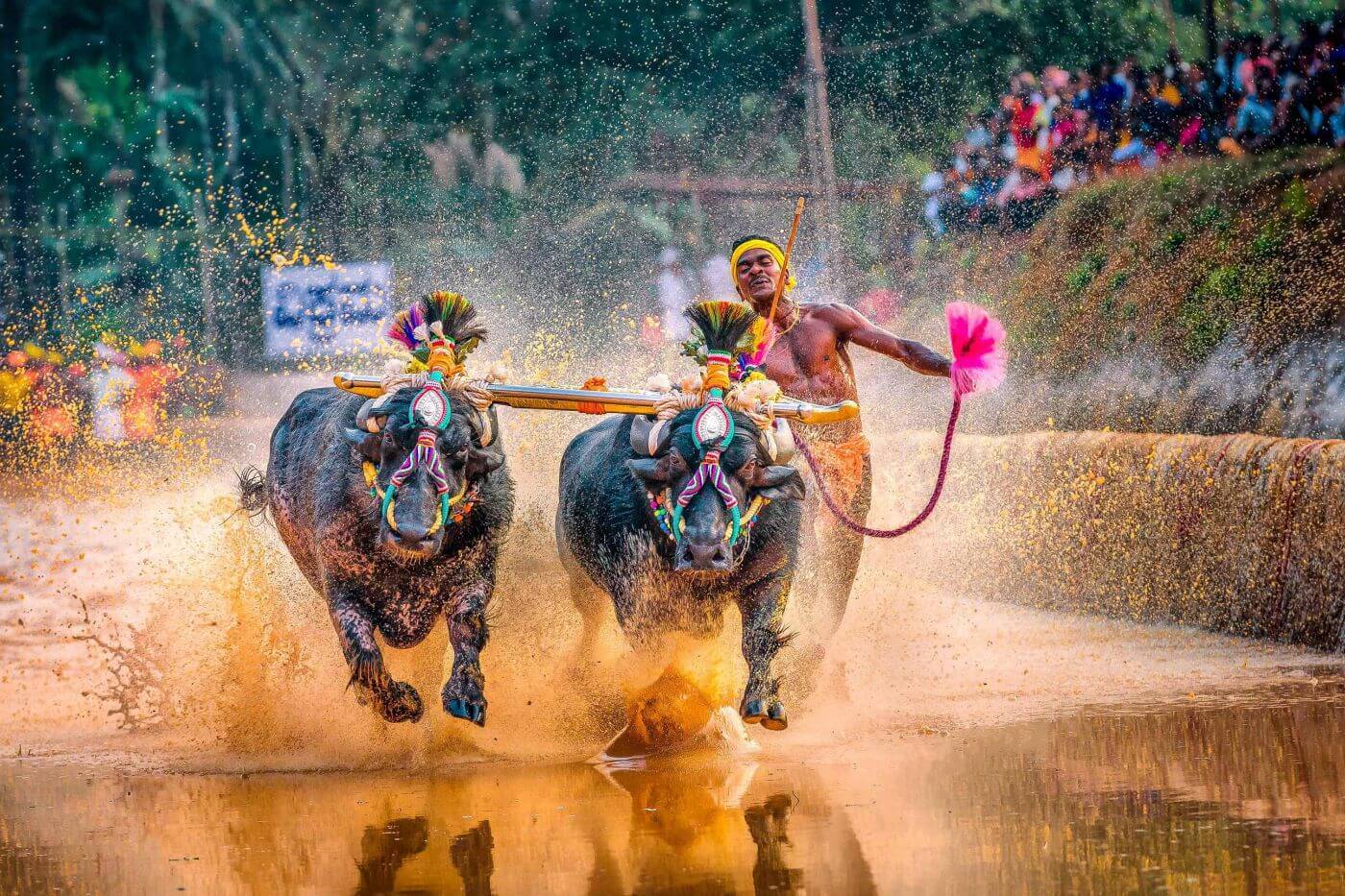
Kambala, the Buffalo Race
A celebration of agricultural prosperity, run at full speed through mud and water.
Kambala is one of the most iconic traditional sporting events of coastal Karnataka, a buffalo race conducted in water-filled paddy fields and practised for centuries across the coastal districts of Udupi and Dakshina Kannada, including the Kundapura region. Born within farming communities where buffaloes played a crucial role in cultivation, it was originally organised after the harvest season and before the next agricultural cycle, not as a commercial competition but as a celebration of agricultural prosperity and gratitude toward the animals that contributed to farming.
Historical origins
The history of Kambala extends back several centuries. Local traditions suggest that landlords, farming families and village communities organised the race as part of annual celebrations connected with agriculture. In earlier times the races were conducted individually rather than as direct competitions, the purpose being to demonstrate the strength, speed and fitness of the buffaloes used in farming. Winning animals were traditionally rewarded with simple honours, marks of pride within the community rather than prizes.
| Then & now | The tradition over time |
|---|---|
| Traditional rewards | Coconuts, bananas and honour within the community. |
| Original format | Individual runs to show a buffalo's strength and fitness, not head-to-head racing. |
| Modern format | A competitive event with structured rules, trophies, medals and significant public attention. |
How Kambala is conducted
The race takes place in specially prepared paddy fields filled with mud and water. A pair of buffaloes is attached to a wooden plank or racing structure, and the jockey runs behind the animals, guiding them through the track at high speed. The contest demands extraordinary skill, balance, physical fitness and experience from both the buffaloes and the jockey. Depending on the category, success is measured in different ways.
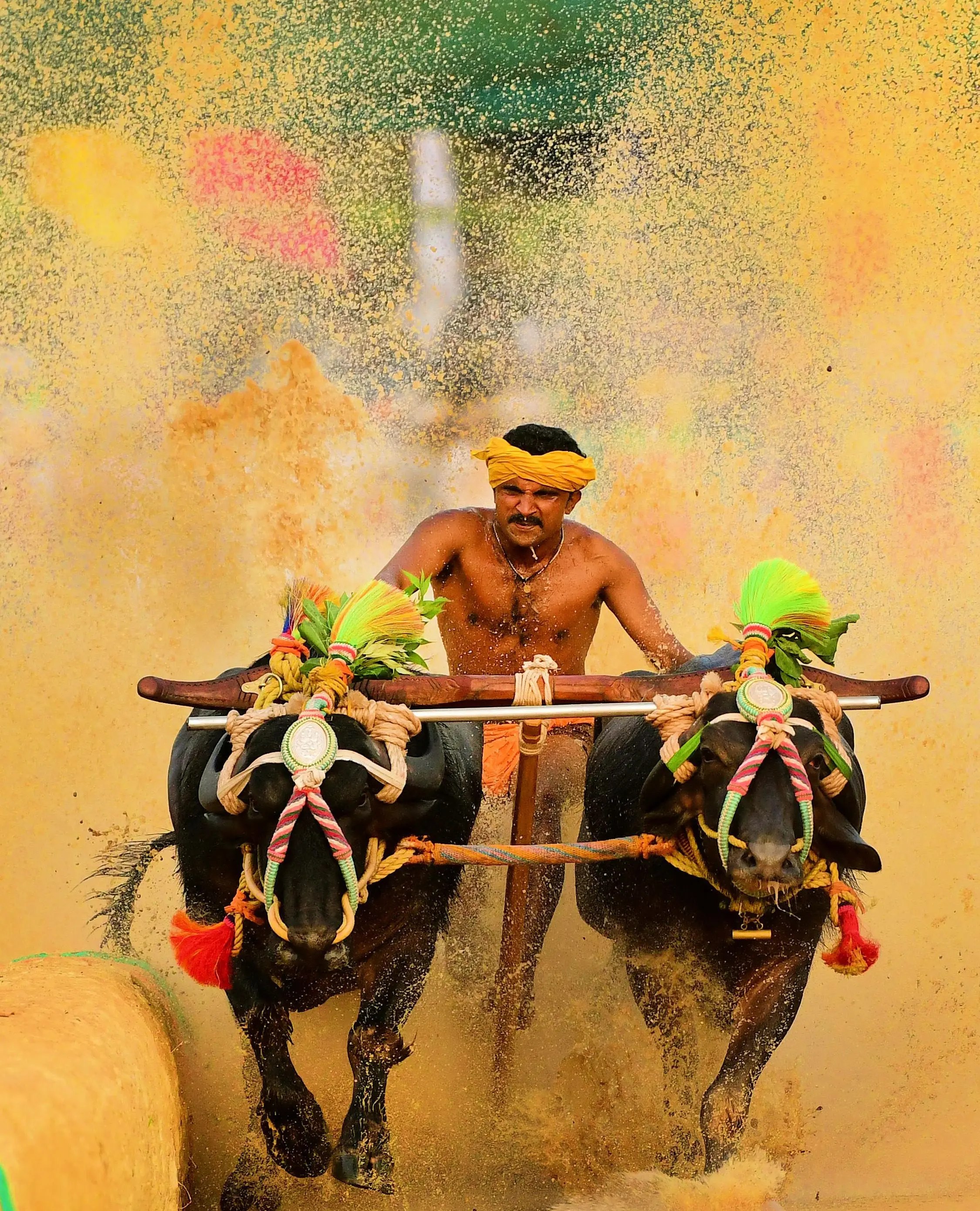
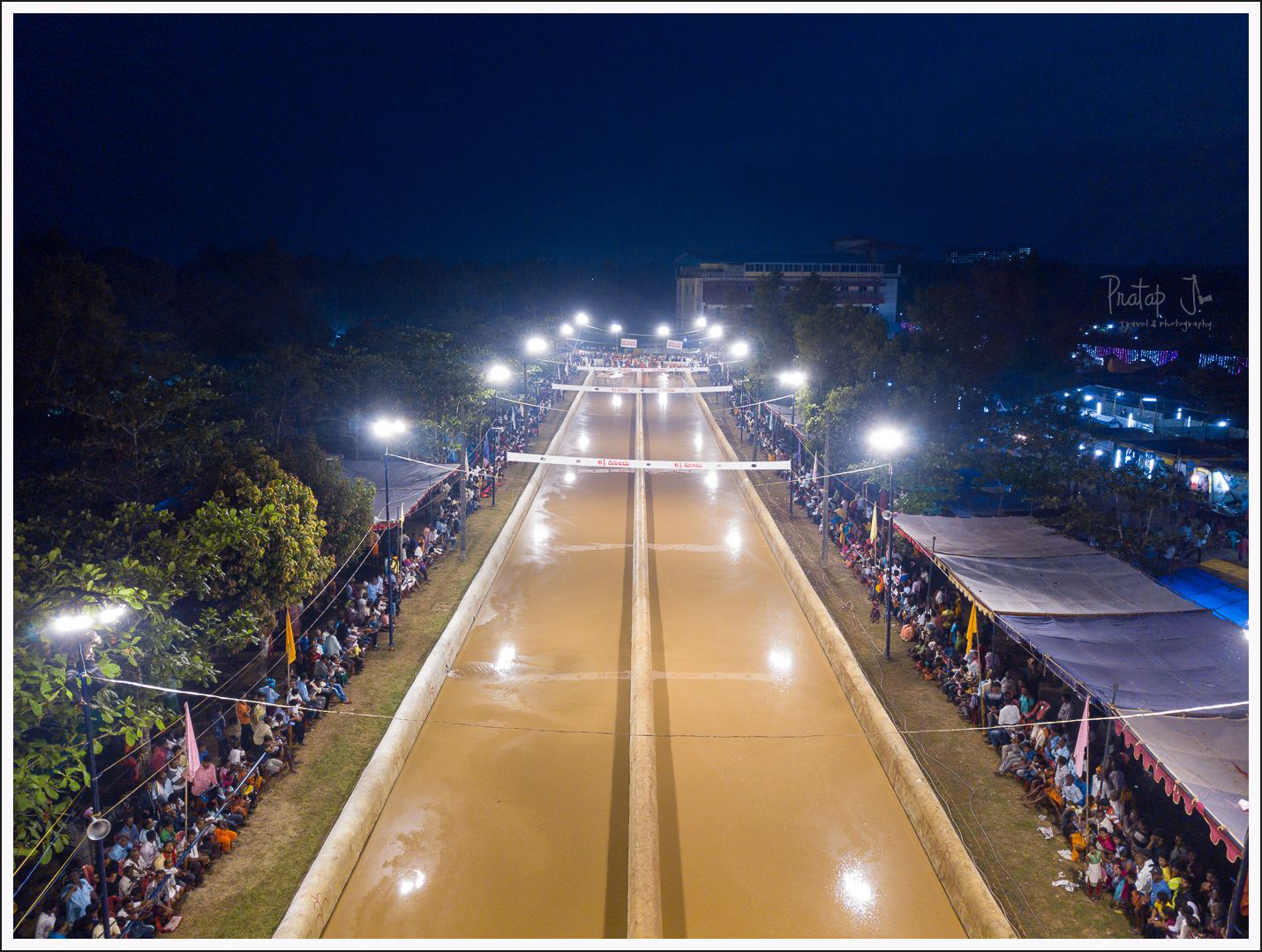
Across the different categories, the objective is to:
- Complete the track in the shortest possible time
- Generate the highest water splash in certain categories, judged by the height the spray reaches
- Demonstrate the speed and strength of the buffaloes
The buffaloes and their keepers
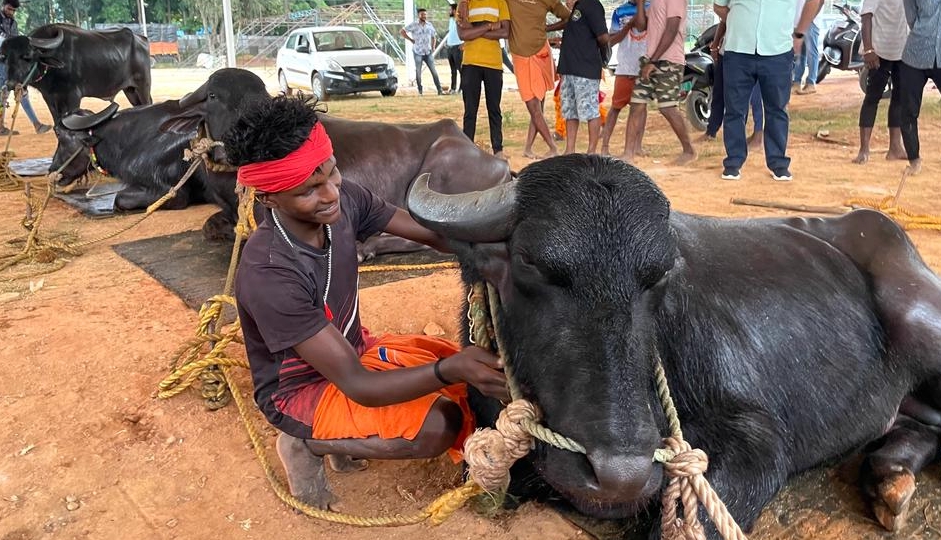
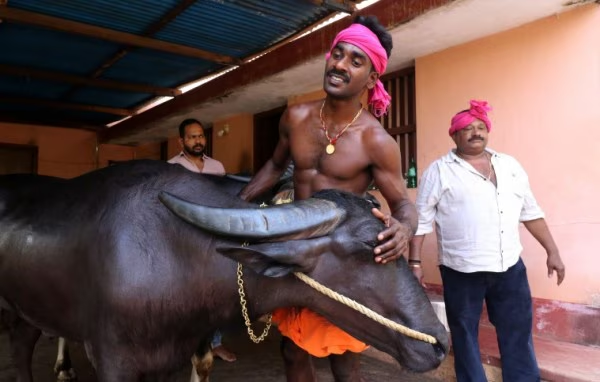
For many families, maintaining Kambala buffaloes is a matter of pride and prestige. The dedication required to train, feed and care for racing buffaloes is substantial, often involving year-round effort. The animals are prized possessions, groomed and conditioned with great attention long before the racing season begins, and the bond between a jockey and his pair is central to the sport.
Cultural significance
For the people of Kundapura, Kambala represents much more than a race. Villages often treat it as one of their most important annual events, and the races draw thousands of spectators, creating a festive atmosphere with food stalls, cultural programmes and social gatherings. Above all it symbolises a set of shared values.
| Kambala symbolises | |
|---|---|
| Agricultural heritage | A direct link to the farming roots of the coast. |
| Community unity | An event that gathers entire villages together. |
| Rural identity | A symbol of the coast's distinctive way of life. |
| Respect for farming traditions | Honouring the animals that worked the land. |
| Celebration of local culture | A festival of food, performance and gathering. |
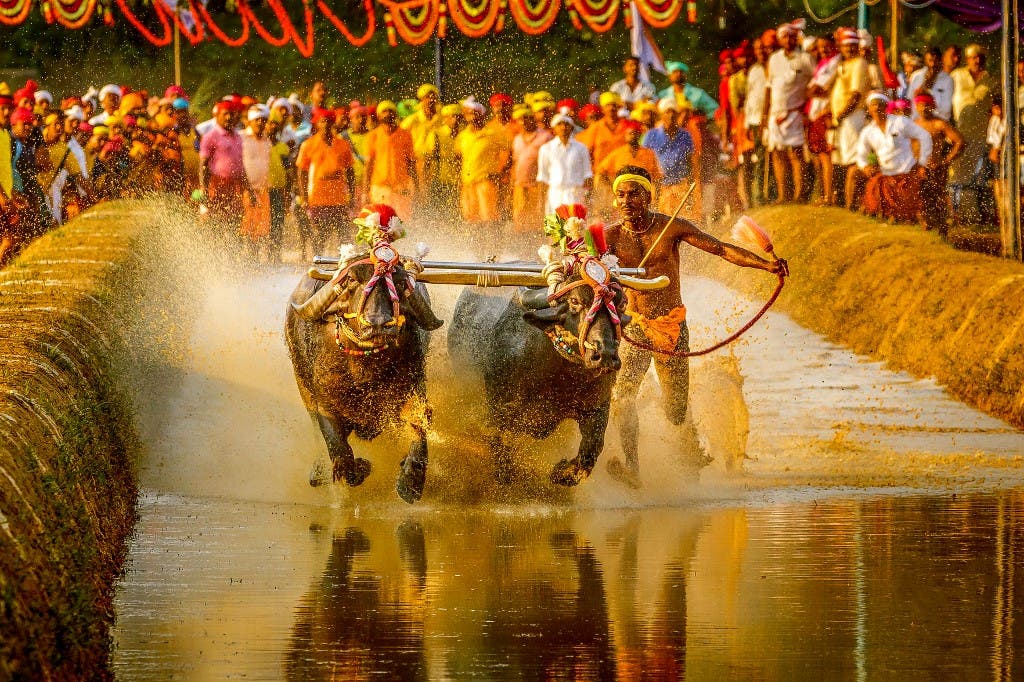 The race draws the whole village
Kambala and Kundapura
Several areas around Kundapura and Udupi have historically participated in Kambala traditions. The sport remains an important part of the cultural memory of the region and continues to be associated with farming communities, woven into the same agrarian calendar that shapes the festivals and harvest celebrations of the coast.
Modern recognition
In recent years, Kambala has gained national and international attention. Television coverage, social media exposure and cultural tourism have introduced the sport to far wider audiences, and the success of Kambala events has transformed what was once a local rural tradition into a globally recognised symbol of coastal Karnataka's heritage.
From the paddy field to the national stage.
What began as a post-harvest celebration among farming families is now a spectacle followed across the country, yet at its heart it remains what it always was, a village's gratitude to the animals and the land.
See also
References & notes
- Compiled report: "Kambala and Kori Katta, Traditional Rural Sports of Kundapura."
- Agrarian and folk traditions of Tulu Nadu and coastal Karnataka.
Photographs were contributed by residents and visitors documenting the sport, and are used for educational and cultural reference, not for commercial purposes.